Exposing the Realities of Teen Dating Abuse
Ministries > Focus on the Family with Jim Daly

When you prepare your teens to enter the world of dating, it’s critical to teach them how to find safe relationships. Dee Dee Said shares her heartbreaking but redemptive journey through an abusive relationship in her teen years. Find out how God ultimately brought hope and healing into her life.
John Fuller: Chat GPT and AI can offer you ideas and attempt to give you answers, but it can't listen with compassion, pray with you, or offer biblical wisdom. Real connection is what brings true hope. Focus on the family offers a free confidential consultation with a Christian counselor to guide you and help you find hope with whatever you're facing. Go to focusonthefamily.com/gethelp or call 1800 a family. That's 1800 the letter a the word family.
Announcer: This program is sponsored by Focus on the Family and is made possible by generous friends like you.
Dede Saeid: The coldness in his tone that day I knew that this was going to be bad and I knew that I needed to get away from him and I had left my car keys back in his bedroom and for some reason I thought I needed to get my car keys get into the front yard and just get away.
John Fuller: Welcome to Focus on the Family with Jim Daly as today we hear a story of hurt and hope and ultimately God's intervention and redemption. Now this is a more mature topic, so if you have young children in earshot, we recommend using earbuds or listen later through our app.
Jim Daly: You know John, today's topic it breaks my heart and it should break everybody's heart when particularly young women are in an abusive relationship. And I'm thinking of your high school years, your teen years and you know I've known even my son's friends that have suffered some of this and it's so it is a silent thing. We don't talk enough about it, but today we want to equip parents to be alert to understand and to have those discussions to equip particularly their daughters about how to know when a relationship is abusive because most of the time this is all new and you don't know. You're this flower and man there are mean people in this world.
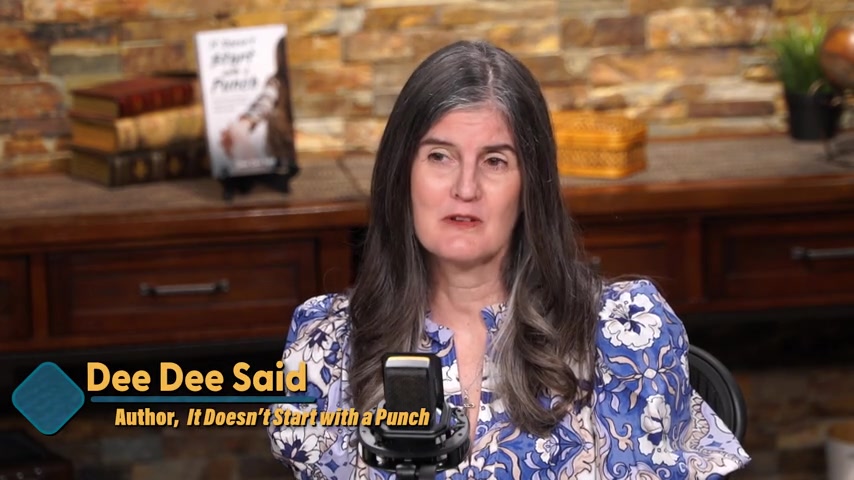
John Fuller: Yeah and our guest has been through what you're talking about experiencing horrific abuse as a teen in a dating relationship and we'll be sharing that with you today. Dede Saeid is our guest. She's advised young adults about healthy dating relationships for many years now as a mentor and as a mom and she's turned her experience into a book called It Doesn't Start With a Punch, My Journey Through an Abusive Teen Dating Relationship.
Jim Daly: Dede welcome to Focus on the Family.
Dede Saeid: Thank you so much. It's an honor to be here today.
Jim Daly: Your name will be easy. My sister is Dede, so this is good. I'll keep thinking of her as I'm talking to you. Let's get into it. That was a serious kind of entry point and some people are going what and maybe even concerned that should we be covering something like this in the open. But man it is so critical for parents and for young people both boys and girls and teen boy and teen girls can encounter abuse. Today we want to concentrate on your story. Growing up you described your fascination with love and relationships and I'm sure I mean this is part of it, right? You you are wanting to have that relationship that's prince charming, correct? What were you feeling at the time?
Dede Saeid: Right right. You know I think it was just part of teenage years of growing up and that was one of the things to look forward to turn it like turning 16 and driving a car was you know beginning to date, right.
Jim Daly: A big deal. So you meet this guy that you've called Brock in the book. I'm sure that's not his real name, but describe how you met him and who this young man was. How old was he?
Dede Saeid: So we were the same age. It was my junior year in high school when we met and it was in the fall and I was giving a few friends a ride home after school and somebody else asked for a ride and when I said yes, then his friend jumped in the car too and and so as I'm driving and dropping people off, Brock is flirting with me and I'm kind of flirting back and and so he when I dropped him off, he asked me for my phone number and I was and up till this point I really didn't know that a boy had been interested in me. My friends had gone out on dates, but I hadn't yet and so I was pretty excited that somebody was showing interest and asked for my phone number and and so then we started talking on the phone quite a bit and after a few weeks he asked me out on a date and of course I excitedly said yes and you know it was everything I hoped for. He came to the front door when he picked me up and opened the car door and we had a nice time at at the restaurant over dinner and he walked me back to the door when the date was over and
Jim Daly: Yeah in that regard when when you're thinking back on this and writing this book, which is helpful because you talk about the signs and what to look for, but he was very polite. He was a gentleman all the way and seemed like wow this is really good, right?
Dede Saeid: Right right yeah. It was everything that I had had hoped the date would be.
Jim Daly: How long did that last until you went uh-oh?
Dede Saeid: I'd say it lasted a few weeks. You know we did things like going to a haunted house with my best friend. We would hang out after school together sometimes with my friends, sometimes not. But it continued good. The first time that it and it was a very different sign than what you would expect. He called me one night on a school night before bed and told me that he had flipped his dad's truck and totaled it and it was the only family car and that he was afraid what his dad was going to do with him and so would I stay on the phone with him and so his dad wouldn't come and do anything and you know as a 16 year old it didn't cross my mind that all the parent has to do is walk in the room and say get off the phone and he would. And instead wanting to help my boyfriend I pulled the covers over my head and you know kept talking to him and as it grew later I kept saying I think we can get off the phone. Surely your dad's gone to bed by now. No no I still hear him up. We should stay on the phone and it was 3:00 a.m. when we finally hung up the phone, right. Yeah.
Jim Daly: And was it true or false?
Dede Saeid: So when I went to school that day he wasn't there and so I was really worried about what had happened to him after we got off the phone and I tried to call him midway through the day and he didn't answer and so my best friend and I drove up to his house after school and when we turned the corner onto his street his dad's truck was sitting in the driveway without a scratch on it. And so you know like I'm disbelief what was last night. I'm humiliated because my friend sitting next to me and so he came out of the house laughing at me for being so gullible at the prank he'd pulled on me the night before, right. I kept telling him that it wasn't funny and I didn't understand why he had lied to me.
Jim Daly: Yeah.
Dede Saeid: And he just kept saying it was a joke. Couldn't I take a joke? I did debate on breaking up with him. But I didn't know if it was something that you broke up over and so I let it go.
Jim Daly: Right. Again you've never been in this territory, right? And you're very uh excited that someone's taken an interest in you and now you got to process
Dede Saeid: Right.
Jim Daly: his difficulties, whatever you know compels him to do these things. What were other things that in the forefront that began to happen that were equally troubling that you weren't really processing the way maybe you should have.
Dede Saeid: You know he started to put down my friends and my family just making you know kind of jokes, but putting them down and and I didn't know quite how to respond to that and then he started putting me down saying things like I wasn't coordinated. No wonder I wasn't better on the tennis team. He tried to tell me that I wasn't smart and when I countered with it I was taking the harder classes in school than he was. He said well that's book smart. You don't have common sense. You're not going to survive in the real world. So it was you know I would try to speak back to it, but he always had a rebuttal that made me question myself.
Jim Daly: Let me ask you this a delicate question, but I think an important one. What left you vulnerable to that kind of manipulation? I mean you knew who you were.
Dede Saeid: You know I I think it was two things. I think we're all a little confused of who we are at that age. You know as much as we think we know we're we're trying to fit in and it's an ever changing landscape. But I also think that we're desensitized to sarcasm. You know it it rains in school hallways and so when I was confronted with it it wasn't really much different than what I'd heard other people saying or in other situations. It didn't feel good and I didn't like it, but I didn't recognize that it was bad.
Jim Daly: It wasn't unusual.
Dede Saeid: Right right.
Jim Daly: Except in the context of you know a guy that you think likes you maybe would treat you differently. But really these are mechanisms of control, right? That's what he's trying to do is gain the upper hand and manipulate you etc. That relationship then moved into him isolating you, him following you. Describe how long into the relationship that was and when he began to show jealousy and control in a much more forthright way.
Dede Saeid: Right. Right. Correct. So the first sign of physical abuse was pushing me in the hallway after school one day. So I hadn't seen the jealousy yet. We were talking to a a classmate after school one day and we were debating on something kind of trivial and wanting to look cool in front of his friend. I did a light-handed back slap on Brock's shoulder and in response he pushed me with both of his hands and it was so hard that I fell backwards, slid on the floor, dropped all my books. I was mortified and you know that time alarm bells went off in my head. But I was I think I I was in shock. I didn't know how to respond to that. You know when you talk to your kids about dating you know here's how you respond to being hit isn't usually at the top of the list. So I told myself that he wouldn't have done what I thought he did, that he wouldn't have done it in front of somebody else that he was bigger than I was. He was about 6 ft almost 200 lbs. I'm 5 6 and high school weighed about 100 lbs. So I just told myself he didn't
Jim Daly: Right. Yeah. Yeah it's not a contest.
Dede Saeid: Right yeah, but I just said he didn't know my own strength or his own strength and so I and denial, which is a big factor in staying in a relationship.
Jim Daly: So you're rationalizing it. In fact I think in the book you talked about well maybe it was my fault because I hit him on the shoulder and that was his reaction and I mean even that that's really that looking inward first is such a good thing, but in this case it can lower your receptors to reality, right?
Dede Saeid: Yes exactly.
Jim Daly: Cuz you look in first rather than saying okay that guy's unhealthy.
Dede Saeid: Yes yes yeah.
Jim Daly: Yeah yeah. In that regard Dede you did seem to recognize there's something really odd going on. In the book you mentioned it felt like you were dating Dr. Jekyll and Mr. Hyde. So describe kind of that growing epiphany and those feelings of oh this is not normal.
Dede Saeid: Yes. So it what Jim was talking about a minute ago it was that there began to be rules and I wouldn't know anything about these until I'd crossed the line. Like I would talk with a classmate and then when Brock and I were hanging out after school I would mention the conversation and he'd get really upset that I had talked with this person. You know it was either yelling or or shouting or you know just very aggressive behavior with me and and so I I slowly grew into a shell of a person. You know I would misstep and there would be consequences for it and but I never every time it was over I just put it behind me and move forward and there was still a lot of good that was in the relationship. You know we still went on dates. We went on school for lunch. We still went on some double dates and so there was lots of fun between us, but then there was these episodes that were yeah frightening and and I just want to behind me.
Jim Daly: Well I would think almost maybe even unconsciously because of where he's coming out of some kind of woundedness obviously, but like he knows the balance. He needs to do so many good things, so many right things, but he's trying to keep you close and push you away at the same time. Is that did it feel like that?
Dede Saeid: I just think I was lost just lost in the relationship.
Jim Daly: Yeah. Were your parents engaging this? Were they observing it? Were they concerned obviously? Did they see things? What did they see?
Dede Saeid: Both my friends and my family saw things that they were concerned about. My friends noticed a change in my demeanor when there'd been an episode with Brock and so they would try to talk with me about that. But I already carried so much shame. I mean you're not supposed to be hit and so or even talk to the way that I was. And so I thought something was wrong with me that this was happening and so I carried shame and couldn't talk about it. So when my friends or my family tried to talk with me about it I just got very defensive and with my words pushed them away. You know I I don't know what my parents saw initially, but I do know that they saw bruises over time.
Jim Daly: Wow you it was that often that he might hit you physically.
Dede Saeid: Yes yeah and this is when I write about it in the book. He bit me sometimes. He would we would be watching a movie or just sitting talking and he would grab my arm and bite it hard enough to leave teeth marks on my arm and say I just want to know what it's like to take a bite out of somebody. So it was more that I was always on this ever shifting landscape of uncertainty and fear.
Jim Daly: Yeah. Well this is Focus on the Family and we're covering very difficult topic obviously with our guest Dede Saeid and she's captured her story in the book It Doesn't Start With a Punch, My Journey Through an Abusive Teen Dating Relationship. And you can swing by our website to get a copy and that's focusonthefamily.com/broadcast. And Dede that physical aspect of manipulation and abuse kind of crescendoed. There was a rodeo story you told in the book. Won't you share that with us?
Dede Saeid: Sure. So by then Brock was telling me the rules rather than misstepping and and learning them and he told me not to wear my overalls, which were cool back in the 1980s. They've come back again. But so he told me not to wear my overalls to the rodeo, which really surprised me. I mean you were wranglers to the rodeo, not not overalls, but I knew that he thought that I looked cute in them and I wanted to look cute for my boyfriend. Right right. So I was I was wearing something I thought he would find me attractive in. And so we went to the rodeo and then we left and after it was over we went back to his house and we sat on the couch and he said to me that the first thing I had done wrong was wearing the overalls and the second thing I had done wrong was coming home with him. And I the coldness in his tone that day I knew that this was going to be bad and I knew that I needed to get away from him and I had left my car keys back in his bedroom and for some reason I thought I needed to get my car keys get into the front yard and just get away. And I don't know how I made it to his bedroom, but I did and I remember feeling relief as I came around the corner. Only as soon as I rounded that corner he was standing there in front of me holding a rifle and I didn't see an option. And I remember the wall being behind my back and just falling to the floor and crying thinking that I was about to die. And he he started talking to me instead and led me to the couch and told me that you know I needed to listen to him and and then he told me that because he thought that I was attractive in the overalls he was afraid that somebody else at the rodeo was going to find me attractive and that he just didn't want to lose me and he wanted to protect me from other people and so that was why he was reacting this way.
Jim Daly: Wow that is a lot to carry as a teen girl.
John Fuller: Yeah.
Dede Saeid: It was.
Jim Daly: It's crazy.
Dede Saeid: Yes yes.
Jim Daly: And then something happened and what was that change?
Dede Saeid: So early in the relationship he was very sexually coercive with me to the point that I finally gave in to his pressure. And having grown up in the church I only wanted to be with one person. And so that was why I tried to wait, but it was confusing. Like everything I was seeing in the movies it was you know sex was happening. I was hearing it in the school hallways. He was telling me that if I loved him I would have sex with him and so I finally gave in and we did start a sexual relationship.
Jim Daly: Did it come to a point when you were saying no and he kept going?
Dede Saeid: So no once I gave in I was a pretty willing I mean it to me it just became part of our relationship. But the weekend of my 19th birthday I was home from college. I had actually you know graduated high school, moved away to college.
Jim Daly: And away from him or still in touch with him?
Dede Saeid: We were still dating. We were still dating and so and I came home frequently on the weekends to see him. Stayed with my parents, but would date Brock. And so the weekend of my 19th birthday I was home and he had long since made it known that he didn't like my parents. He didn't like being in the house with them. When he pulled up out front I was expected to come out to the car. And this night things ran long and I of course didn't go out to the car and he came inside and I was really nervous. But he was he was very cordial with everybody and pleasant and so I relaxed and once we were done with cake and ice cream he and I got in the car and drove to a park. And walked around and he held my hand and he was nice and we spent some time there and on the way home we were driving home and he pulled off on a dirt road that I didn't even know was there. And we started I thought we were going to mess around and we started to mess around and he pinned me down and he raped me. And it took me a very long time to say that that was rape because I'd been sexually active with him and so I I didn't think that it could be rape. It was probably 15 years and the help of a counselor that helped me see that it was. And I remember driving the rest of the way home feeling broken and another level of shame because there wasn't anything outward that you could tell what had just happened to me. And but it was the turning point in our relationship.
Jim Daly: Yeah I I thought that would be the case. I mean that might have been the rock bottom for you then.
Dede Saeid: It wasn't the act itself. A few weeks later we were talking on the phone. I was back at school and somehow that evening came up and he ended up saying that it was punishment for not being ready on time. And that was shocking enough, but you know everything else up until this point I had seen as a knee jerk reaction. I had done something wrong and he had reacted to it. But this time he'd been in my parents' house. We'd driven to the park. You know he'd had all this time to change course and he'd still done this terrible act on me. And so it was intentional harm and I I began to process that and that he had a choice and that this wasn't who I wanted to be with.
Jim Daly: What was that point where this became abuse? You knew it was this it where you said okay this is abuse and I've got to get out of this.
Dede Saeid: I don't think that I knew it was abuse until many years later.
Jim Daly: After it was all broken off.
Dede Saeid: Right right. I didn't know to call it that for a long time.
Jim Daly: How did it break up? How did you come to a point where you said okay this is totally unacceptable or however you process it? What words did you use in your own mind to say?
Dede Saeid: You know it was it was that phone call started it, but that was a lot to process and grapple especially by myself. And I remember giving myself 30 days to decide what I wanted to do. And at the end of that 30 days I was solid and I knew that I didn't want to be with him anymore and I found the courage and the strength to say this is over.
Jim Daly: Where was God in the midst of all this in your relationship with him and where how were you processing spiritually what you were experiencing emotionally and physically?
Dede Saeid: God is what saved me in that relationship. I had withdrawn from every activity except for student council. I had broken off every friendship. I had I was completely isolated in this relationship with Brock. My parents were trying to help me, but it felt like I was in trouble with them. You know Brock was telling me that he loved me, but obviously I was always in trouble and misstepping there and so love didn't feel like love is supposed to feel. But I knew God loved me unconditionally.
Jim Daly: Let's you went through that quickly and I appreciate that, but with the parents that they're
Dede Saeid: Okay yeah.
Jim Daly: questioning, their curiosity about how you were doing felt not like love, but like an Inquisition.
Dede Saeid: Yes.
Jim Daly: That's really critical for us as parents to understand that. So what would have been the better way, a possible way that they could have communicated with you that would have drawn you closer to them and closer to reality?
Dede Saeid: Yeah. I think it's hard I mean as a parent today it would be very hard for me because I just want my child out of that relationship. But they're broken to a point that we don't understand. Yeah I didn't talk about this for 20 years and the first time I told my parents about it I had such a physical reaction to the emotional hurt that my whole body shook. So you know for parents to understand that we can't go straight into what's going on, but to reassure and love them and say I care about you and and as they get comfortable say I want to talk with you about something and I just reiterating that you care about them.
Jim Daly: And in the reality unless that teen or adult child is willing to share the parent can't pry that open.
Dede Saeid: Right.
Jim Daly: So you have to lay some groundwork is what you're saying. Get the trust built up
Dede Saeid: Yes.
Jim Daly: because you're vulnerable, right? You feel embarrassed like you said many times. You don't want to say these things cuz you're hearing in your head I'm sure. Why didn't you know better?
Dede Saeid: Yes. Right yes yes.
Jim Daly: And I mean that's a crusher. I think that's one of the most important lessons out of this for us as parents is how to talk particularly again with your teen girls about pressures that they might be feeling. Again this is all new, so they don't know the rules of the game like you were suggesting and you certainly don't want that that person to set the rules. So you've got to keep that relationship up with your teen girls before they ever get into this spot so that there's open communication. I would say even discussing with them what it should look like. This is what a healthy relationship should look like in a non Charlie Brown wa wa wa kind of lecture, right? So you've got to find that ability to do that as a dad, as a mom, as a mom and a dad, right?
Dede Saeid: Mm. Right right. Right. Right yeah yeah. Right absolutely.
Jim Daly: And try to connect with them. Dede as you were raising your own children I can only imagine that response was to overprotect, to overengage, to overstate what you might be feeling because of your experience. What happened for your own parenting journey in that regard?
Dede Saeid: You know I was trying to have conversations with my kids from an early age about friendships and what they were like. So often we say well is that person nice, but you know asking more open ended questions of what is that person like? How do they treat you? Um was where I went and then my poor kids I sat next to them in every movie that we watched and said you don't fall in love in two weeks and um you know just trying to show what was wrong in the movies that they were watching and
Jim Daly: Okay. So that's how that came out.
Dede Saeid: Yes.
Jim Daly: You mentioned it was years later. Just describe that briefly like how I guess why and then what happened over those 20 years that you were quiet. You weren't saying anything and you were trying to wrestle through what happened to me.
Dede Saeid: You know I don't even know that I was wrestling with it most of the time when I ended it I just wanted it behind me. I was mad at everything I had given up in the three years that we dated and I just wanted to move forward with my life, but 20 years later I had a concussion and realized that the only thing we can count on in life is God. And I was immediately flooded with shame and guilt from that high school relationship and I knew I needed to dig in and heal from that.
Jim Daly: I want to expand quickly on that. We're right at the end, but there may be adults listening, you know 40 something, 50 something, 60 something that have never had that reconciliation and all they have felt is shame. I made a bad decision. I stayed in that relationship. I allowed him to do that to me. All those words.
Dede Saeid: Right.
Jim Daly: How did God wrap you up and say no, my daughter, I love you. I'm sorry this happened. How did you feel reconciled with all of those what you would say to yourself were poor decisions?
Dede Saeid: You know it was a few ways. I got involved with a a counselor, Christian counselor. I journaled a lot. It was probably a six month process of a lot of prayer, reading the Bible. And um two things. One in a Sunday school class the DVD that we were listening to a woman was recounting another experience and she said that she heard God tell her this didn't change who she was, that she was the same it was something that happened to her and that he still loved her and that was like it was being spoken to me. And then on a bike ride one day I was praying and just asking how I could remove this. And God said as far as you know the Bible verse as far as the east is from the west, so have I removed your sins. And I thought if God has forgiven me that much I need to be able to let go of this.
Jim Daly: Oof what a moment of being set free.
Dede Saeid: Yes.
Jim Daly: And that's what the Christian message is all about. You know that idea that our sins are washed away cuz Jesus paid the price for us, right?
Dede Saeid: Yeah. Yeah. Yes.
Jim Daly: That's the whole that 's why we call it the good news. We don't earn our way into heaven. God has done that already. And yet we have consequences on this earth and I'm so sorry that you had to go through that. I'm grateful that you were bold enough, brave enough, courageous enough to write this in a book. And I think John the key here is for parents again if you knew your daughter was going to be abused emotionally, physically, both wouldn't you do everything you could do to try to prevent that? That's why I think we have energy to get your message out D. As you you can do something to engage your child, to talk about these things appropriately. We also have caring Christian counselors here Focus on the Family. You can call with that question. You know my daughter this is the situation. What do you think I should do? And they'll provide some advice. They'll give you resources. I'm sure Dede's book will be one of them now in the great treasure trove of resources from Focus on the Family. And I know this is a super super difficult issue, but if we the church do not talk about it who will? They win. They being evil, right? So engage it. Have that conversation with your 12 13 year old daughter. And we know often times the shoe can be on the other foot too, so your son should know first how to treat women and girls. And then secondly if they're being abused somehow address that too. So this is a great resource. Dede thank you for being with us.
Dede Saeid: Yeah thank you so much.
Jim Daly: We'll encourage you to get in touch with us, to connect with the counselor if you need some steps forward. Our parenting site has lots of great resources for you as a mom or a dad, but our counseling team donors allow us to provide a phone consultation with you. It's free of charge. And you can connect with them through a phone call or stop by focusonthefamily.com/broadcast to learn more. And if you're in a spot to donate to the ministry we'd appreciate that so much either a monthly pledge or a one-time gift of any amount. When you contribute to the work of Focus on the Family and support the show we'll say thanks by sending a copy of Dede's book to you. Well plan to join us next time. It'll be a great show as we talk with CBS Sports host James Brown about his faith.
James Brown: I don't go around trying to and I said this earlier to beat people over the head with the Bible, but we are to share the love of Christ lovingly, truthfully, and winsomely.
Jim Daly: That's next time on Focus on the Family and remember when you get in touch let us know how you're listening on our website, through our mobile app, or on our podcast feed. I'm John Fuller and on behalf of Jim Daly and the entire team join us next time as we help you and your family thrive.
Related Episodes
Spiritual Practices for a Sanctified Life
Saturday, October 10
Teaching Your Child How to Face Bullies with Confidence
Friday, October 9
Helping Your Children Thrive in Faith and Education
Thursday, October 8
Related Videos
About Focus on the Family
We want to help your family thrive! The Focus on the Family program offers real-life, Bible-based insights for everyday families. Help for marriage and parenting from families who are in the trenches with you. Focus on the Family is hosted by Jim Daly and John Fuller.About Jim Daly
Jim Daly
Jim Daly is President of Focus on the Family. His personal story from orphan to head of an international Christian organization dedicated to helping families thrive demonstrates — as he says — "that no matter how torn up the road has already been, or how pothole-infested it may look ahead, nothing — nothing — is impossible for God."
Daly is author of two books, Finding Home and Stronger. He is also a regular panelist for The Washington Post/Newsweek blog “On Faith.”
Keep up with Daly at www.JimDalyBlog.com.
John Fuller
John Fuller is vice president of Focus on the Family's Audio and New Media division, leading the team that creates and produces more than a dozen different audio programs.
John joined Focus on the Family in 1991 and began co-hosting the daily Focus on the Family radio program in 2001.
John also serves on the board of the National Religious Broadcasters.
Contact Focus on the Family with Jim Daly
Mailing Address
Focus on the Family
8605 Explorer Dr.
Colorado Springs, CO
80920-1051
Toll-free Number
(800) A-FAMILY (232-6459)