Eyes on the Temple
Ministries > HopeLives365 with Mark Finley
SUBSCRIBE:
Apple Podcasts
Jews, Muslims, and Christians all have their eyes on the same sacred ground in Jerusalem—but what if the real answer to guilt, judgment, and the future isn't found in any building at all?
Mark Finley: The gospel means good news, and what news could be better than this, that Jesus Christ, having taken our place on the cross, has earned the right to take our place in the judgment. He is the atoning sacrifice for our sins, but also for the sins of the whole world.
Announcer: This is Hope Lives 365 with Pastor Mark Finley. Today's message, All Eyes on the Temple. Enjoy, and remember you can always catch up with past messages and stay up to date with HopeLives365 and Pastor Mark by going to hopelives365.com, and stay with us for a free Bible study offer later in this program. And now, Pastor Mark Finley.
Mark Finley: As I stood on the Mount of Olives overlooking the old city of Jerusalem, I thought of the rich religious history that for thousands of years has played out in this part of the world. Jerusalem is the home of the three great world religions, Judaism, Islam, and Christianity. Each of these faiths claim Jerusalem as an important part of their religious heritage. Today, each of them is focusing not only on Jerusalem, but especially on the Temple Mount, where the Muslim Dome of the Rock currently stands. In a sense, all eyes are on the temple. There's a movement within Judaism in Israel to rebuild the Third Temple. Solomon built the First Temple, and it was destroyed by Nebuchadnezzar's armies. Zerubbabel built the Second Temple, and although it was enlarged by Herod, it was totally destroyed by Titus in AD 70. Here's what one leading Jewish rabbi and scholar says about rebuilding the Third Temple. While it's true that our generation has much to be grateful for, and that our return to Israel is nothing short of miraculous. The golden dome sitting atop the Temple Mount provides a constant reminder that the Torah cannot be fulfilled perfectly, and Judaism cannot be expressed fully until the Third Temple is rebuilt in Jerusalem. According to a poll, one-third of the Israelis believe that Israel should erect the temple on Temple Mount. Israel's housing minister called publicly for the rebuilding of the temple. He said, we built many little temples, referring to synagogues, but we need to build a real temple on the Temple Mount. Some Jewish groups are instructing their youth in the minute duties of the priesthood to minister in this rebuilt temple. They have carefully studied the ancient sanctuary and are meticulously making the furniture to the exact dimensions of the Old Testament Torah. They are serious about reconstructing the temple on the site of the Dome of the Rock. Some of the most expensive real estate in Israel is the ground right in front of the Eastern or the Golden Gate. This is the logical entrance to the temple. The gate is sealed, and the Jews believe that the Messiah will enter through the eastern gate, resurrect the dead, and march triumphantly to rule in the temple. Jewish eyes are on the temple today, but Muslim eyes are on the temple. Built in the 7th century, it's the holiest site in the Islamic world after Mecca and Medina in Saudi Arabia. It was built on the exact site of the former Jewish temple, so sacred to our Jewish friends. Today, the entire Temple Mount area is regarded as sacred by the majority of Muslims. It was here Muslims believe that Abraham offered up Ishmael, whom they teach is the child of promise, not Isaac. It was here they believe that Mohammed had a significant vision and ascended to heaven on a white horse. Most Muslims view the temple for the building of a third temple. They view this movement for the building of the third temple on Temple Mount by certain ultra-conservative Jewish groups as an affront to Islam due to the presence of the Alaskan mosque and the Dome of the Rock. Furthermore, the mosque and the shrine have been on the Temple Mount for far greater length of time than the Jewish temples were. Muslims are resolute in calling for recognition of their exclusive rights over the site and demand that it be wholly transferred to Muslim sovereignty. Furthermore, some Muslims deny any association with the Mount to the former Jewish temple which stood at the site. Muslim eyes are on the temple, and they're deeply concerned about any discussion of the Jews rebuilding a third temple on their holy mountain. But Christian eyes are on the temple. According to some Christian writers, the third temple will be rebuilt when the Antichrist, often identified as the political leader of a mega international confederation of nations similar to the European Union or the United Nations, secures a peace treaty between the modern nation of Israel and its neighbors following a global war. The Antichrist later, they believe, will use the temple as a venue for proclaiming himself as God and the long-awaited Messiah, demanding worship from humanity. In their understanding, this will ultimately lead to Earth's last war, the battle of Armageddon, the rapture of the believers, the time of tribulation, the conversion of 144,000 Jews, and Earth's final events. They see the rebuilding of the temple as one of the signs that the end is near. Now, before we rush into accepting various ideas and human teachings about the rebuilt temple, it'd be well to pause and listen to Jesus' own words. Jesus pointed the Samaritan woman away from a specific geographical location when she asked him where to worship. His response to her question is enlightening. He shared this eternal truth that true worship is neither on this mountain nor in Jerusalem, but in spirit and in truth. We find that in John chapter 4, verse 21. Sitting on the Mount of Olives, Jesus declared regarding the Jewish temple in Matthew 24, verse 38, see your house, that is the temple, is left to you desolate. When Jesus was crucified, the veil in the temple separating the holy place from the most holy place was split in two, and the Shekinah glory of God's presence departed, never more to return. You'll find that in Matthew chapter 27, verse 50 and 51. The Jewish temple may or may not be rebuilt. The Bible does not directly answer that question, but it's clear that the Jewish temple no longer has any significance in Bible prophecy. Jesus stated of the Herodian temple, not one stone will be left on another. Every one of them will be thrown down. Luke chapter 21, verse 6. This prophecy was fulfilled to the letter when Titus' armies attacked and overthrew Jerusalem in AD 70. When the majority of Jewish leaders failed to understand the very essence of these temple services that pointed forward to Jesus, and when they failed to understand that the sacrifices and priesthood pointed forward to the Messiah, they forfeited their special privileges as God's chosen people. So, is there any temple that has any significance today? There is. Our eyes are on another temple, a temple where the eternal destiny of all humanity is being settled. Hebrews chapter 8, verses 1 and 2 make this point crystal clear. Now, this is the main point of the things that we're saying. We have such a high priest who is seated at the right hand of the throne of the majesty in the heavens, a minister of the sanctuary and of the true tabernacle, which the Lord pitched and not man. Our eyes are fixed not on an earthly temple, an earthly sanctuary, or an earthly priesthood. They are fixed on Jesus Christ, our eternal sacrifice and great high priest. They're focused not on what's happening in Israel, but on what Jesus is doing in heaven. And it is this high priestly ministry of Jesus that we're going to explore together in this program. This is an entire New Testament concept. When you look at the high priestly ministry of Jesus, we see that it's sprinkled throughout all the New Testament. There is one New Testament book dedicated to clearly explaining Christ's ministry in heaven's sanctuary, and that's the book of Hebrews. Understanding and receiving the benefits Jesus offers us through his ministry in the sanctuary makes an enormous difference in our spiritual lives. It makes the difference between whether we're consumed with guilt or rejoicing in grace, whether we're struggling in frustrated defeat or rejoicing in victory, whether we're filled with fear and anxiety about the future or rejoicing in the promises of God. Whether we are bowed down with despair or buoyed up in hope. The theme of the book of Hebrews is Jesus is better. Jesus' temple in heaven is better than the earthly temple. Jesus' sacrifice on the cross is better than animal sacrifices. Jesus' high priestly ministry is better than the priestly ministry of earthly priests. Now, the key word to remember about this book of Hebrews is the word access. Through the life, death, resurrection, and High Priestly ministry of Christ, we have access to his all-encompassing pardon. We have access to his eternal power. We have access to his all-embracing presence. We have access to his everlasting promises. Let's study these four aspects of the high priestly ministry of Jesus and rejoice in the blessings that are ours in Christ. First, his all-encompassing pardon. Hebrews chapter 4, verse 14 to 16. Seeing then we have a great high priest who's passed through the heavens, Jesus the Son of God, let us hold fast our confession. Jesus, the Son of God, became the Son of man so that we, as sons of men, can become the sons of God. Paul's point here in Hebrews is hold fast, seize, never give up. Let your faith focus on Jesus, our great high priest. In Jesus, we have all we need. Then the apostle goes on to describe Jesus' complete identity with our human needs. Hebrews 4, chapter 4, verse 15. For we do not have a high priest who cannot sympathize with our weaknesses, but was in all points tempted as we are, yet without sin. Since Jesus, the Son of God, became the Son of Man, he understands us better than we understand ourselves. He has come near and identifies with our needs and weaknesses. In one of his books, John Foster tells the story of coming home one day in the 1930s to find his daughter sitting before the radio crying uncontrollably. He couldn't understand it and asked her why she was so upset. He discovered that a news bulletin had just announced the breaking news that the Japanese tanks had entered Canton, China. Most people probably didn't find that too disturbing. They didn't think twice about that radio announcement. It made little difference to them. Why then was John Foster's daughter in tears? Because she had been born in Canton. She went to school there. Her friends lived there. To her, Canton was not some faraway place. It was the place where she grew up and held for her all of those wonderful memories of childhood. The difference was that she had been there. When you've been there, it makes all the difference. And there is no part of human experience that Jesus cannot say, I've been there.
Announcer: We'll be right back with Pastor Mark Finley. We thank you for listening and hope you're enjoying today's message. Our mission is to attractively present the Christ-centered biblical truths of scripture in a practical, relevant way to people around the world, so that they may experience the abundant life that Christ offers. If you want to learn more about the Bible, check out our free Bible series at globalbibleschool.org. That's globalbibleschool.org. Discover answers to your deepest questions straight from God's word. And now back to Pastor Mark Finley.
Mark Finley: When our hearts are broken, when life has drenched us with tears, when guilt weighs us down, when condemnation enshrouds our hearts, when darkness overwhelms us, we find refuge in the Christ who's been there. He's faced the temptations in common with all humanity. He bore all of our guilt and condemnation on the cross of Calvary. He understands and sympathizes with all our needs. So, as the text says, we can come confidently to the throne of grace, that we may obtain mercy and find grace and help in time of need. With our eyes fixed on Jesus and his ministry in heaven's sanctuary, we can lay the burden of our guilt down and receive the wonder of his grace and the beauty of his pardon. His arms are wide open to us. He says, come unto me, all you that are burdened and heavy laden, and I'll give you rest. When we are burdened with sin, we have a Savior. When we're burdened with guilt, we have a Savior. When we're burdened with condemnation, we have a Savior. Jesus will forgive us and pardon us and cleanse us. There's a second great truth we find at the sanctuary, and that is Jesus' all-enabling power. We discover it in Hebrews chapter 7, verse 24 and 25. At heaven's sanctuary, we find not only pardon for the past, but power for the present. At heaven's sanctuary, we discover not only deliverance from sin's guilt, but deliverance from sin's power. Our text says, but because he, Jesus, continues forever, he has an unchangeable priesthood. Therefore, he's able to save to the uttermost those who come to God through him, since he ever lives to make intercession for them. The intercession of Jesus in heaven's sanctuary has the power to save to the uttermost all who open their hearts to receive the blessings of his grace. Notice the expression, he ever lives. Jesus is and always will remain our intercessor, our high priest, our ever-loving, pardoning, all-powerful high priest. His mercy is forever. His grace is forever. His goodness is forever. His power is forever. His love is forever. All that we need, we have in Jesus. All our hearts long for, we have in Jesus. All our souls desire, we have in Jesus. When Jesus, through the prophetic word, declares that he will save to the utmost. What does that mean? Uttermost is a superlative. It means the greatest, the highest, the utmost. Jesus saves us totally and completely, both from the penalty of sin and the power of sin. But you say, how can it be? I know myself better than anyone else. I know my weaknesses, my faults, my secret sins. I ask, do you believe Jesus' word or your feelings? I ask, where are you looking? At yourself or the Christ of the sanctuary? What does our text say? Therefore, he's able. He's able. He's able to pardon us. He's able to forgive us. He's able to cleanse us. He's able to empower us. He's able to save to the uttermost all who come to God through him. I want to come, don't you? Why can he save us to the uttermost? Because he ever lives to make intercession for us. Has Jesus' intercession in the heavenly sanctuary ceased yet? Will it cease one day? According to the last chapter in the Bible's last book, there will come a day when every individual on planet Earth will make their final, irrevocable, unchangeable decision. We'll either stand with Christ or stand against Christ. Revelation chapter 22 states it clearly. He who is unjust, let him be unjust still. He who is filthy, let him be filthy still. He who is righteous, let him be righteous still. He who is holy, let him be holy still. Revelation 22, verse 11. Christ is coming to give out his final rewards. Revelation 22, verse 12 says this. It says that Jesus, he that is righteous, let him be righteous still. He that is holy, let him be holy still. He that is filthy, let him be filthy still. He that is unholy, let him be unholy still. You see, prior to his return, every person on planet Earth will have an opportunity to respond to the claims of Jesus' love. One day soon, Christ's ministry in heaven's sanctuary will cease, but it's not ceased yet. If his ministry in heaven's sanctuary has not ceased, then he will save all who come to him to receive his pardon and his power. There's a wonderful, encouraging statement from a little book that sold millions and millions of copies, well over a hundred million copies. It's called Steps to Christ, and page 52 of that book says, Jesus loves to have us come to him just as we are, sinful, helpless, dependent. We may come with all our weakness, our folly, our sinfulness, and fall at his feet in penitence. It is his glory to encircle us in the arms of his love, and to bind up our wounds and to cleanse us from all impurity. Where are your eyes fixed? On some earthly temple? No. Let us fix our eyes on Jesus in the heavenly sanctuary. We are looking to Jesus, according to Hebrews 12, verse 1 and 2, the author and finisher of our faith. By faith, we enter into the very presence of God in heaven's sanctuary, and our hearts are secure. In the days of ancient Israel, it was unthinkable that any Israelite could enter into the presence of God behind the veil in the most holy place of the heavenly sanctuary. Only the high priest could enter into the Shekinah glory of his presence, and that only once a year on the Day of Atonement. But marvel of all marvel, wonder of all wonders, you and I by faith have access, we have access to the very presence of God in heaven's sanctuary, and there our hearts are secure. There our souls find rest. You see, every day in the ancient sanctuary, the sanctuary is a busy place. All day long, people were coming and going. In addition to the sacrifices for sin, people were praying, fulfilling vows, giving thanks, conducting purification rites, dedicating babies, holding their bar mitzvahs, and bringing in their first fruits. All this was part of what was called the daily or the continual activities of the tabernacle. 10 days before Yom Kippur, the priests blew the warning trumpets, telling everybody to get ready for anyone who had sinned and hadn't brought a sacrifice, who had a debt and hadn't paid for it, or had hurt someone and hadn't asked for forgiveness. Because the Day of Atonement was and still is recognized by the Jews as Judgment Day, a day of reckoning, giving account of one's life before God. On the ancient Day of Atonement, everyone in Israel passed in judgment before God, but the people didn't have to stand in line and go into the sanctuary one by one to be judged. Instead, they all gathered together in the person of a single human being, the high priest. We could say that the high priest was their proxy or their stand-in. He had assumed their identity and with it their guilt. This is represented in the judgment scene of Daniel 7, the prophet says, I kept looking until thrones were set up, and the Ancient of Days took his seat. Thousands upon thousands were attending him, and myriads upon myriads were standing before him. The court was set, and the books were opened. Daniel 7, verse 9 and 10. When Daniel saw this, he certainly must have thought of the Day of Atonement, so he would not have been puzzled by the next part of the vision, in which someone who appears to be a son of man, a human-like figure, enters the heavenly courtroom. This, Daniel would understand, was the high priest. This identification is further confirmed when he sees that the human being does not sit down as a judge. He enters the court. The court is already seated, and after the record books are open, he comes to the ancient of days, according to verse 13 of Daniel 7, and was presented before him. Rather than sitting down, he stands before the throne. Why is this Son of Man, this high priest, treated like a prisoner before the bar of God? Because as the people's substitute, he's counted as a sinner. For their sake, he goes into court as a defendant, as if he himself were on trial. The good news, in fact, it is the best news that ever could be told, is that the Son of Man does not go in empty-handed. He goes in having paid the price for sin by a blood sacrifice, his death on the cross. He has obtained a full pardon for every one of the sins that he's bearing. Jesus has justified us by faith. The gospel means good news, and what news could be better than this, that Jesus Christ, having taken our place on the cross, has earned the right to take our place in the judgment. The sanctuary was involved in people's lives every day of the year, but on Yom Kippur, all eyes turned toward the sanctuary with a special concentration. All regular activity ceased on the Day of Atonement. Everybody fasted. People who lived too far away would pray facing toward Jerusalem. Those who lived within traveling distance would come in person and gather around the tabernacle. There they waited in total silence because what went on in the tabernacle demanded their full attention.
Announcer: You've been listening to Pastor Mark Finley. We hope you enjoyed today's message and that it increased your faith in God and his word. If you'd like to learn more, Pastor Mark invites you to visit globalbibleschool.org for an inspiring interactive Bible study experience. That's globalbibleschool.org. And now a final thought from Pastor Mark.
Mark Finley: Friends of mine, we are living right now in that final day of atonement. The hour of God's judgment, according to Revelation chapter 14, verse 7 has come, and God invites us to come, to open our hearts, to confess our sins, to accept Jesus Christ as our Lord, as our Savior. He invites us to come and absolutely surrender to his will. There can be no doubt that the history of our planet has turned the corner and is now in the home stretch. The long ages of sin and suffering are nearly over. Right now, as you listen to this, Jesus is presenting the cases of those who've died in ages past in heavenly courtroom. Now, there are some fundamental questions we need to ask. Today, as the warning trumpets are sounding, have I placed my hands on Jesus, my sacrifice, my only hope. Through sincere confession, have I asked forgiveness of my sins and done everything in my power to make things right? Are my heart and soul filled with an enduring attitude of repentance and contrition, or have I come, become comfortable in the acceptance of sin? Here's a good place to remember the words of the beloved Apostle John. My dear children, I write this to you so that you will not sin. But if anyone sins, we have an advocate with the Father, Jesus Christ, the righteous one. He is the atoning sacrifice for our sins, and not for ours only, but also for the sins of the whole world. First John chapter 2, verse 1 and 2. Friend of mine, today, I invite you to make a full surrender to Jesus. The sanctuary is open today. Jesus is our high priest today. Forgiveness is possible for our sins today. There is strength in Jesus today, but one day the sanctuary will close. One day every human being will have made their final irrevocable choice for or against Christ. The sanctuary closes not because his mercy has run out, but because everybody has made a choice for or against Christ. The time to make your decision is now. The time to decide for Jesus is now. The time to accept him fully, completely is now. Will you make that decision right now as we pray? Father in heaven, I pray for those listening to this broadcast that everyone will make their eternal decision for Christ and not put it off. The hour is late. The arms of Christ are wide open for us today. So we come with all of our sin to receive his pardon and strength right now in Jesus' name. Amen.
Related Episodes
The World's Greatest Peacemaker
Monday, November 16
Perilous Pitfalls of Compromise
Saturday, November 14
Certainty in an Uncertain World
Friday, November 13
Related Videos
About HopeLives365
HopeLives365 exists as an international Bible based Christ-centered ministry to give people hope for today, tomorrow and forever. We believe that discovering God’s ultimate plan for our lives brings life’s greatest joy. In a world of uncertainty, God’s Word, rightly understood, brings certainty and assurance. Our ministry will provide you with the resources to live a life of total health-physically, mentally, emotionally and spiritually. If you are interested in improving your physical, mental, emotional and spiritual health there are resources on our HopeLives365 site that will make a positive difference in your life. If you have questions about faith check out our short video clips titled “Truth Still Lives.” If you would like to listen to powerful Biblical Sermons, Pastor Finley’s messages will touch your heart and change your life. If you want material on healthful living, Ernestine Finley’s Natural Lifestyle Cookbook and health related materials will get you on your way to a longer, happier and more fulfilled life. If you have concerns about the future and would like to face tomorrow with greater confidence our presentations on Bible prophecy or one of our Bible Courses are just what you need. The resources on this site are designed with you in mind to enrich your life. It is our desire that they make a powerful difference for you and your family.About Mark Finley
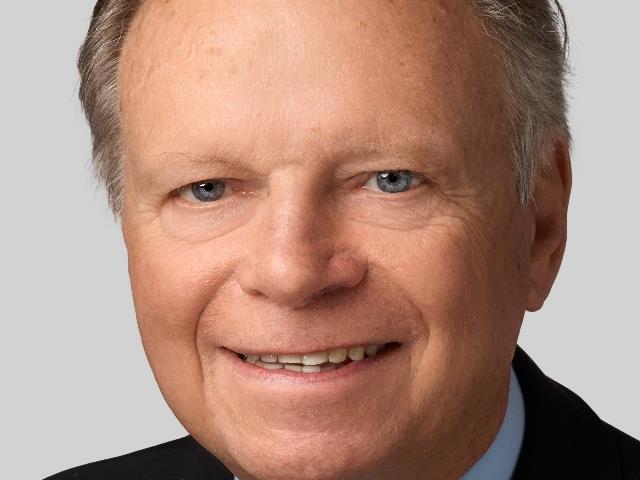
Mark Finley is an international evangelist, television and radio personality, author, teacher, and speaker for the Hope Lives 365 broadcast. He regularly conducts international satellite evangelistic campaigns with tens of thousands in attendance and has spoken in nearly 100 countries. His sermons have been translated into over 50 languages. He has written more than 70 books on Christian living, Bible doctrines, and the prophecies of Daniel and Revelation.Pastor Finley is a faithful student of scripture and proclaimer of Bible truth. He profoundly believes that the Bible is the inspired word of God and provides answers for the deepest questions of life today. His sincerity and love for people shine through each presentation. He and his wife Ernestine have teamed up in Christian ministry for over fifty years. She is known worldwide for teaching Natural Lifestyle Cooking. Continue their Today the Finley’s continue their worldwide ministry at the Living Hope School of Evangelism in Haymarket, Va. and also conduct a Retreat Center for pastors from throughout North America.
Contact HopeLives365 with Mark Finley
Phone:
1-855-888-4673


